Movement
Ten Minutes on Foot After Dinner
Neither a workout nor a step count. Ten minutes on foot at the hour the studies single out, and why the couch usually wins.
The Early Shift, published by Vitrine do Pão. Four to five minutes. General information, not medical advice.
Of all the habits a man past forty-five is told to pick up, the walk after dinner is the least impressive and the best supported. It does not raise the heart rate much. It does not need shoes that cost anything. It takes ten minutes, sometimes fifteen, and it happens at the exact hour when most of us have finally sat down. That last part is the whole problem, and the whole point.
Why after dinner, specifically
The evening meal is usually the largest of the day, and the hour after it is when blood sugar rises the most. Studies that set a short walk straight after the meal against an identical walk at some other hour found the after-dinner version did more to flatten that rise. Not dramatically. Enough to show up in the measurements, consistently, across different groups of people. The body uses moving muscle as a place to put the fuel it has just received; sitting on the couch leaves the fuel waiting.
Ten minutes is not a figure of speech
The trials that produced these results used short walks on purpose, often ten minutes, sometimes fifteen, at an easy pace. Longer walks did not reliably do more for the after-meal effect, and they were abandoned sooner. The sensible target is therefore the small one: to the end of the street and back, around the block, down to the corner and home. A man who can keep that up five evenings a week is doing what the studies did.
Why the couch usually wins
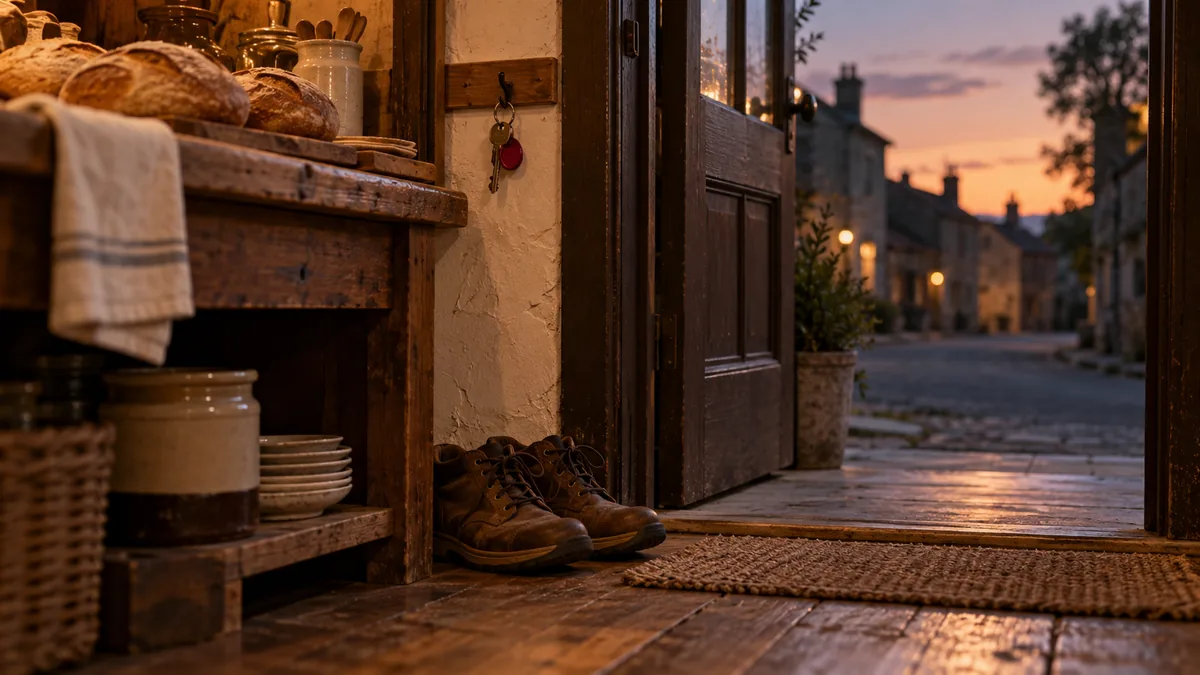
Because the moment is wrong for a decision. After dinner the day feels finished. The couch is right there, the phone is in the pocket, and the walk looks like one more task on a day that already had enough of them. Men who manage to keep the habit tend to describe the same trick: they remove the decision. The shoes stay by the back door. The walk follows the last plate the way washing up follows it. Nobody chooses it; it just happens next.
What a bakery has to do with it
A shop that opens before dawn closes early, and the walk home at dusk is built into the trade. That is partly why these pages exist. The habits that keep a baker steady through a long day are not secrets and they are not sold. They are the window in the morning, the plate at breakfast, the clock on the afternoon cup and the walk at the end of it, and they are available to anyone with a street outside.
The usual boundary
A ten-minute walk is the gentlest thing on this site, and it is still worth a word with a physician for a man who has been told to be careful about exertion, who takes medication that affects balance or blood pressure, or who feels anything unusual while walking. The article describes a habit many men have found easy to keep; it does not know anything about the man reading it.
Next read: Water and Daylight Before the First Coffee